This is the companion article to our guide to the best printable shoe files: instead of designs you download and print yourself, these are commercial 3D printed shoes you order and have delivered, made on demand in print farms. The category is small but real — and growing fast since Nike entered it in 2024.
Two platforms dominate the commercial side of 3D printed footwear today: Zellerfeld (a print-on-demand marketplace where designers publish shoes and Zellerfeld manufactures them in Germany) and Syntilay (AI-designed shoes with biometric scan-to-fit sizing, manufactured by Zellerfeld as a partner). Independent designers like River Family sit alongside, offering the same custom-fit logic without the kiosk overhead.
1. Zellerfeld — the print-on-demand designer platform
Zellerfeld is the most visible commercial 3D printed shoe brand in 2026. The model is simple: designers upload a shoe, Zellerfeld vets it, and once approved the shoe goes on sale. Every pair is printed to order at Zellerfeld's facility in Germany, with the designer receiving a cut of each sale. No warehouse, no sweatshops, no glue, no stitches. Shoes are 100% mono-material, washable, and fully recyclable through Zellerfeld's take-back program. They ship internationally and the price for a pair currently sits at €179-€199.
Nike Air Max 1000 — Red / Atomic Green
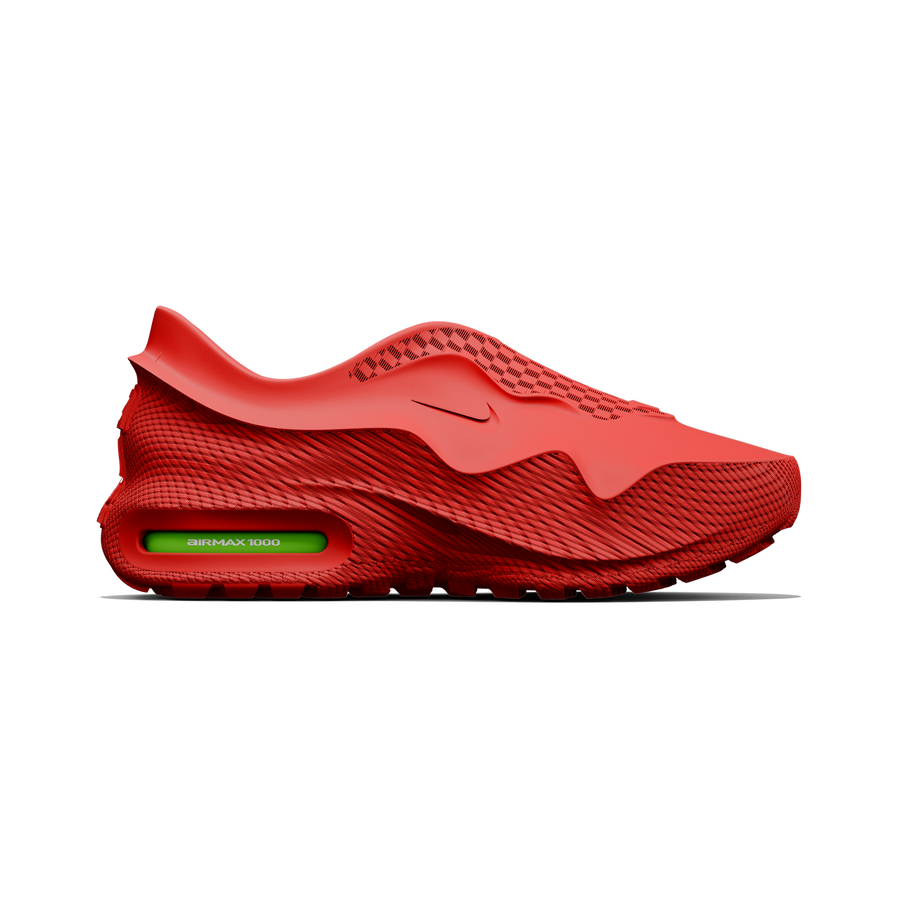
Nike × Zellerfeld — €179
The first fully 3D printed Nike. The Air Max 1000 reinterprets the Air Max silhouette as a single printed object — no glue, no stitches, printed to order. Limited drops sell out quickly; the Red / Atomic Green colorway is the recurring reference.
View on Zellerfeld →Why it matters: a major sportswear brand committing to print-on-demand footwear is the credibility moment for the whole 3D printed shoe category. The drop model is intentional — limited runs build hype, but every pair is still printed on demand rather than stockpiled. Multiple Air Max 1000 colorways exist (Red/Atomic Green, Lilac, Black/Black v2) plus the larger Air Max 95000.
Basilisk — by Benjometry
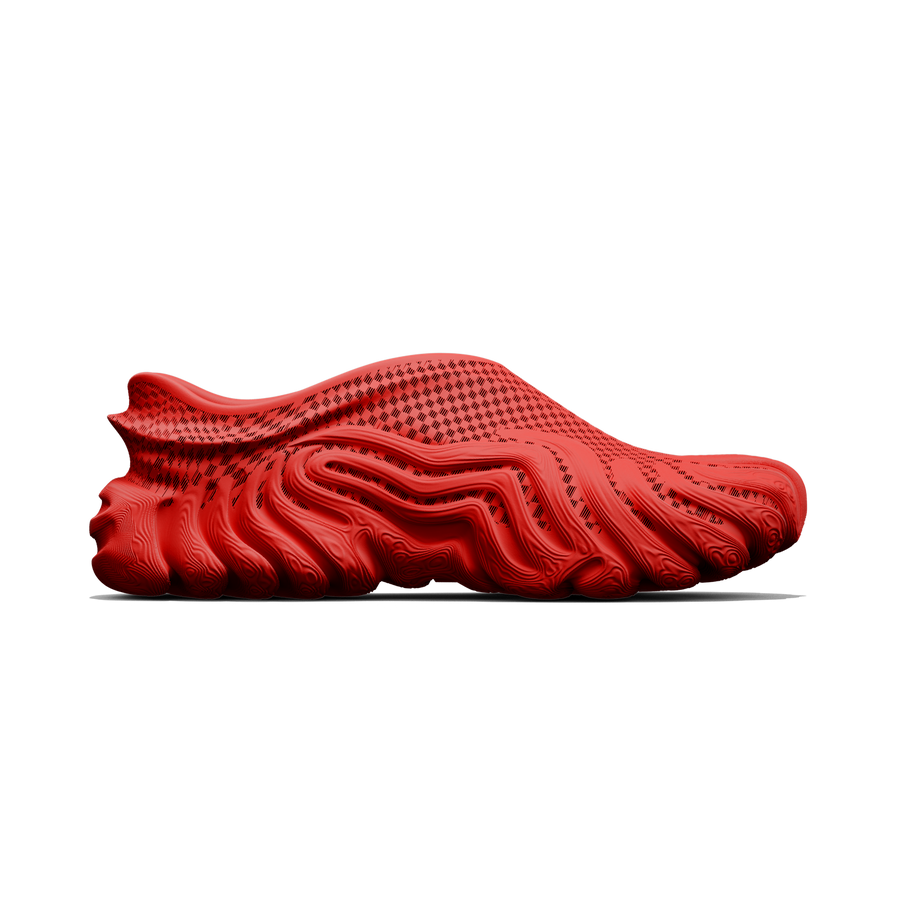
Basilisk — Benjometry × Zellerfeld — €189
A sculptural printed shoe with a strong sci-fi silhouette, designed by Benjometry and sold through Zellerfeld. Striking visual proof that the designer-platform model lets independent creators put shoes in front of a global audience without owning a factory.
View on Zellerfeld →Other notable Zellerfeld drops worth scrolling through: Sean Wotherspoon's Sean Double U Sneaker (€189), the Studio Runner, the Polen and EDDY collaborations from the Hek Lab. The drop calendar moves fast — if a colorway interests you, do not wait.
2. Syntilay — AI-designed shoes with scan-to-fit sizing
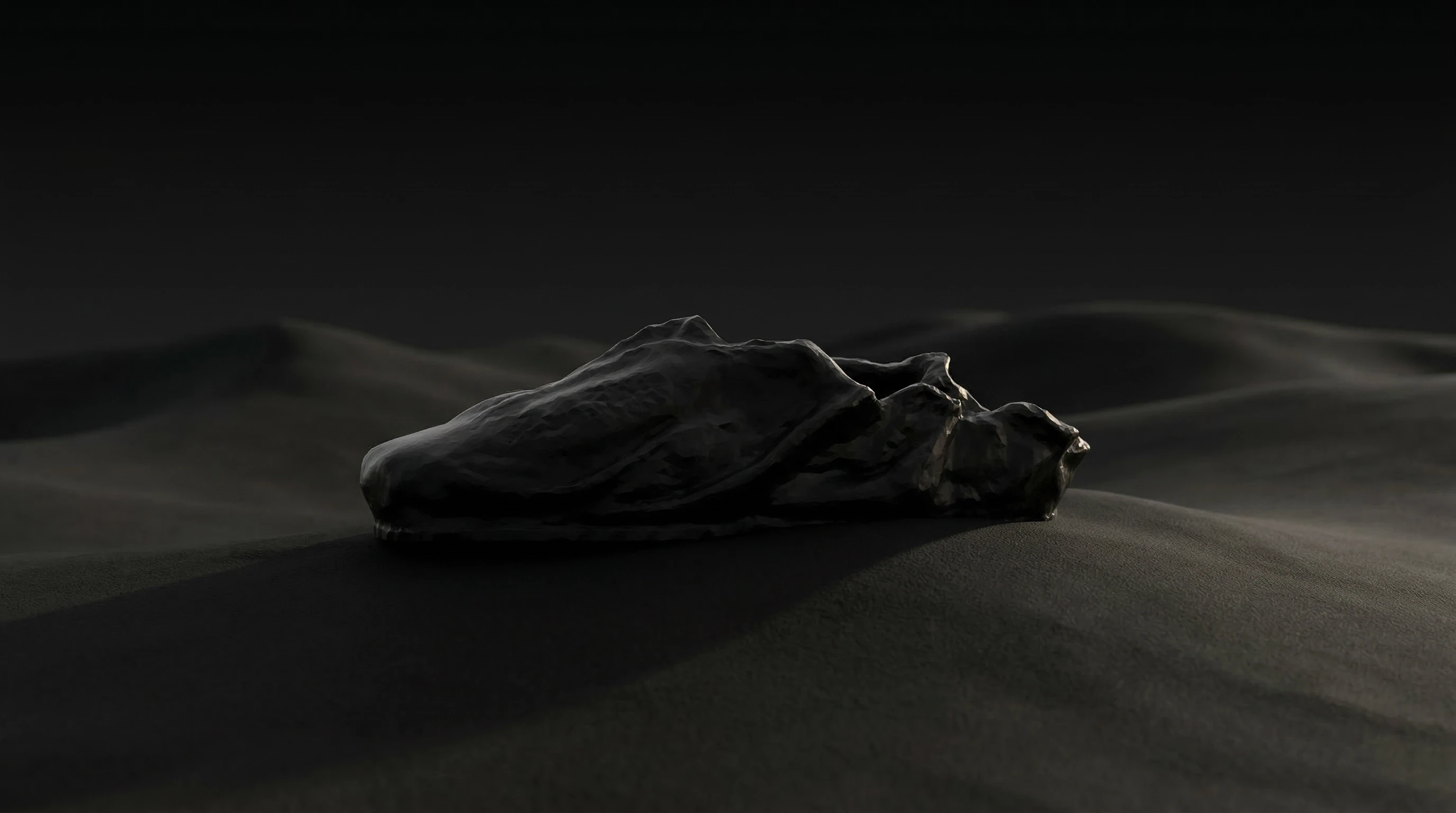
Syntilay SKIN — Sebastian Ciuciu × Syntilay — $250-$400
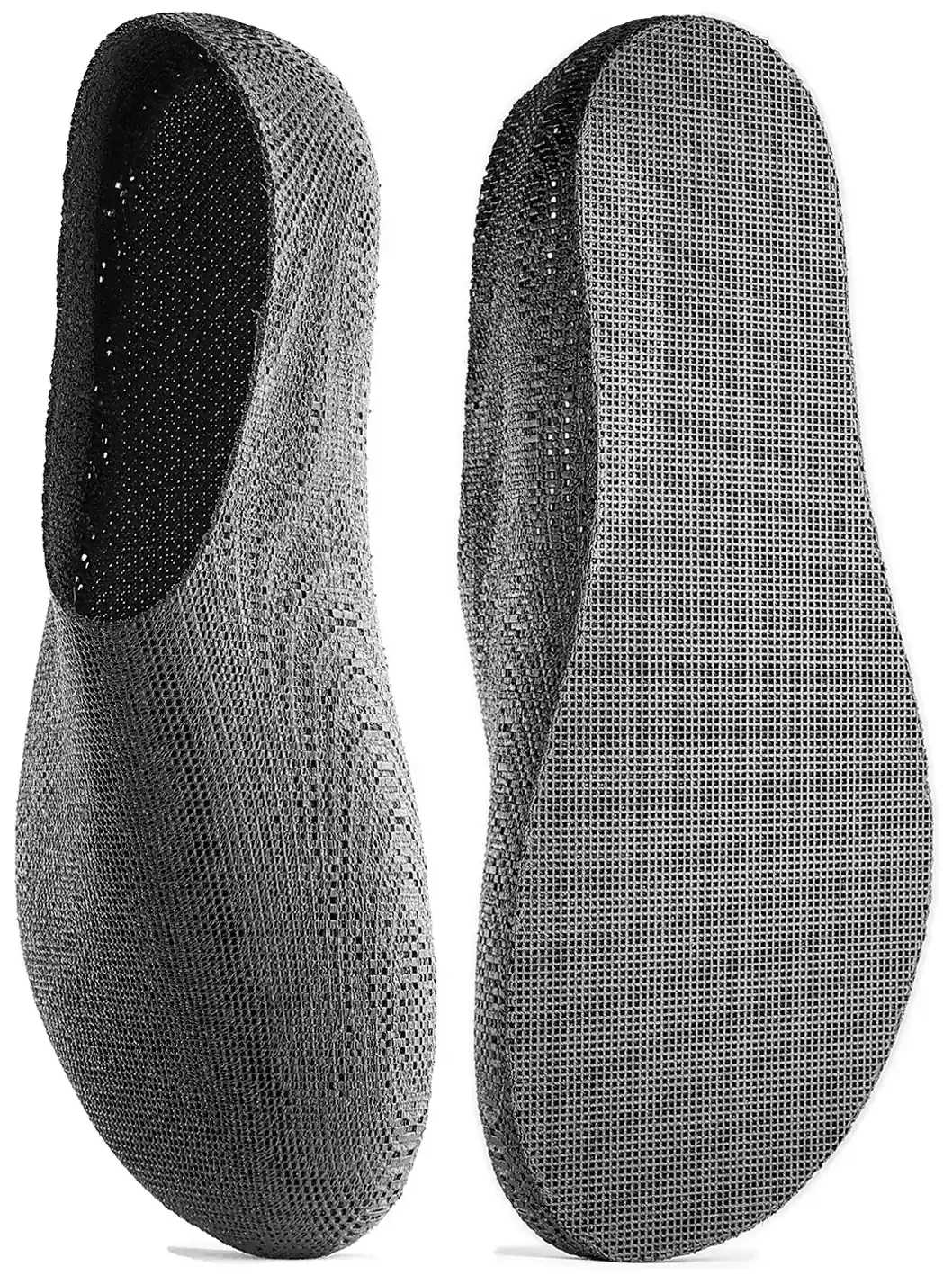
A 3D printed AI-designed slide built from a scan of your foot. Syntilay's flagship product, with over 5,000 biometric data points feeding a custom lattice structure under each foot.
View SKIN on Syntilay →Syntilay's pitch is the next step beyond Zellerfeld: not just printed on demand, but designed by AI and shaped to your specific foot via biometric scan. The brand operates a permanent retail experience at Syntilay Live in Times Square (the Candler Building, NYC) where you can step on a scanning pad and have a fit file generated in person. From there the order goes to Zellerfeld in Germany for printing and is shipped to you.
Their lineup includes the AI-designed Luminez ($189, advertised as their most automated design at 95% AI-generated), the Xplorer Ultra slide ($119), the STEPN GO ($149) and the Pulse Podz ($111-$149) with a lattice midsole. Advisors include Joe Foster, the founder of Reebok, and Kevin Harrington from Shark Tank — names that signal the brand is positioned as a serious sportswear player, not a one-off experiment.
The end-to-end loop is the part to pay attention to: scan → AI-tuned design → on-demand print → ship → recycle. It is the same idea as Zellerfeld but with an extra layer of personalization at the front, and the kiosk turns it into a physical retail moment in a way most 3D printing experiences cannot.
3. River Family — open-source + custom-fit, without the kiosk
River sits between the two worlds above and is the only one of the three that gives you a real choice: print the file yourself or order a finished shoe. Our entire design library is open-source. The same shoe — Tora, Onda, Toe, Taka — can be downloaded for free, printed on your own machine, and even sold under your own brand. Or you can order it directly from us.
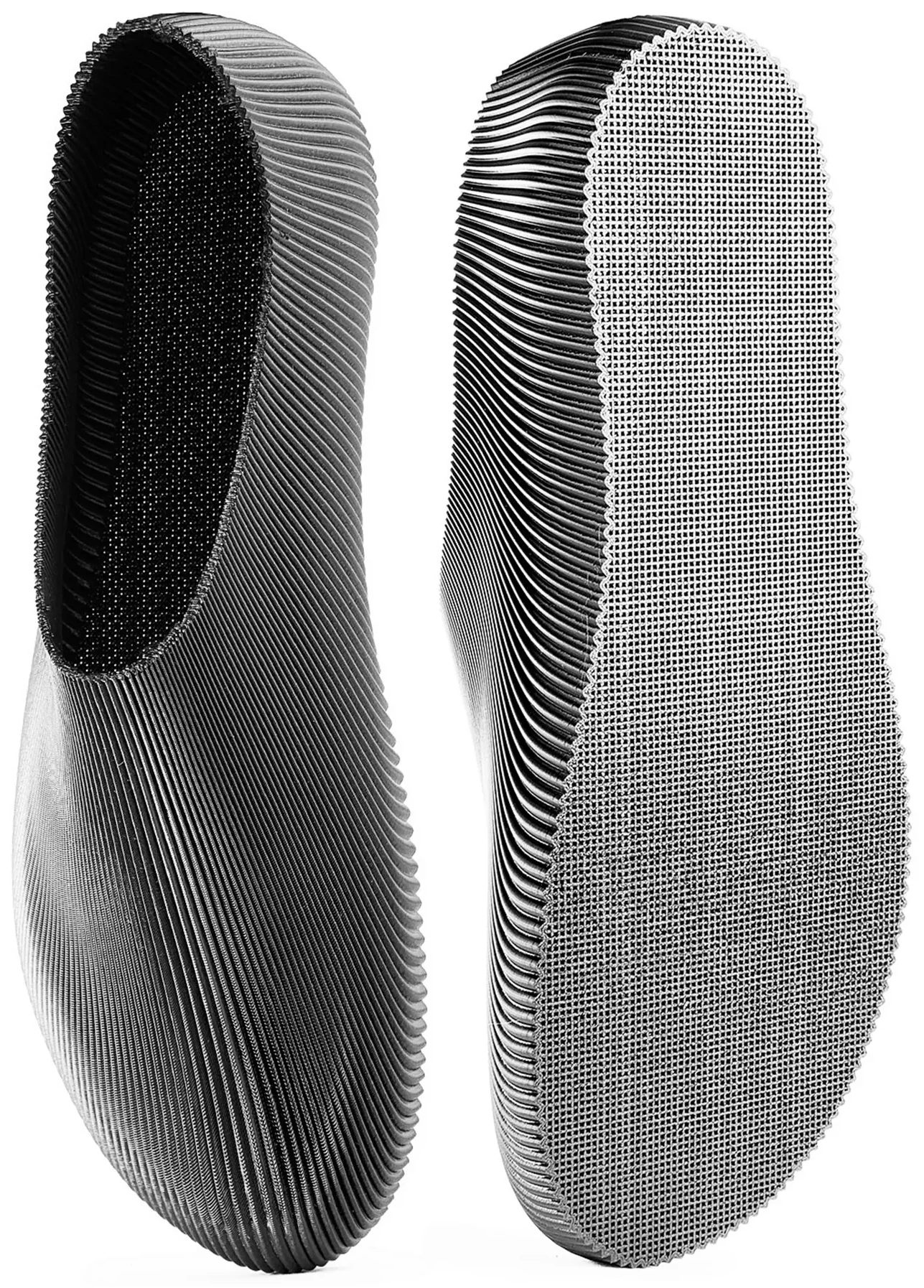
Onda — barefoot, custom fit from two foot photos
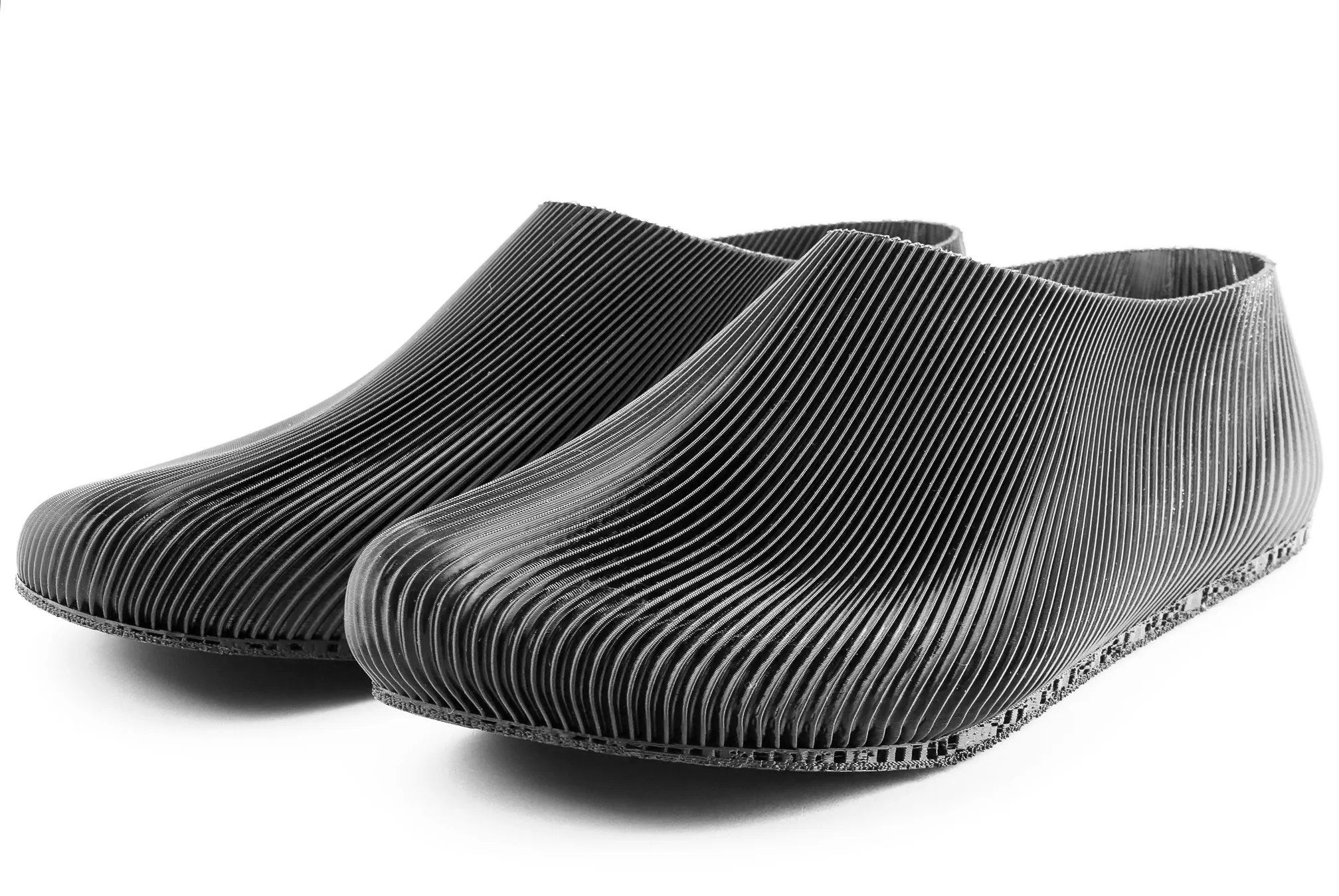
Our most refined barefoot shoe: smooth interior, semicircular wave pattern generated as the toolpath, comfortable enough to wear without socks. Available as a standard size or as a custom fit from two photos of your feet.
View Onda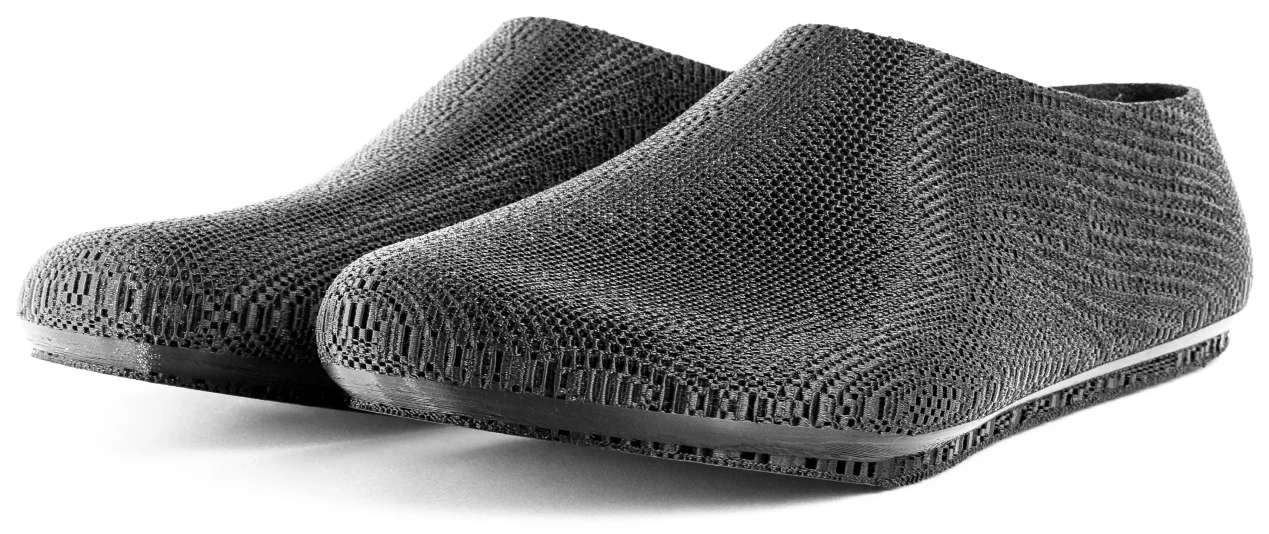
Taka — soled, ready for the door
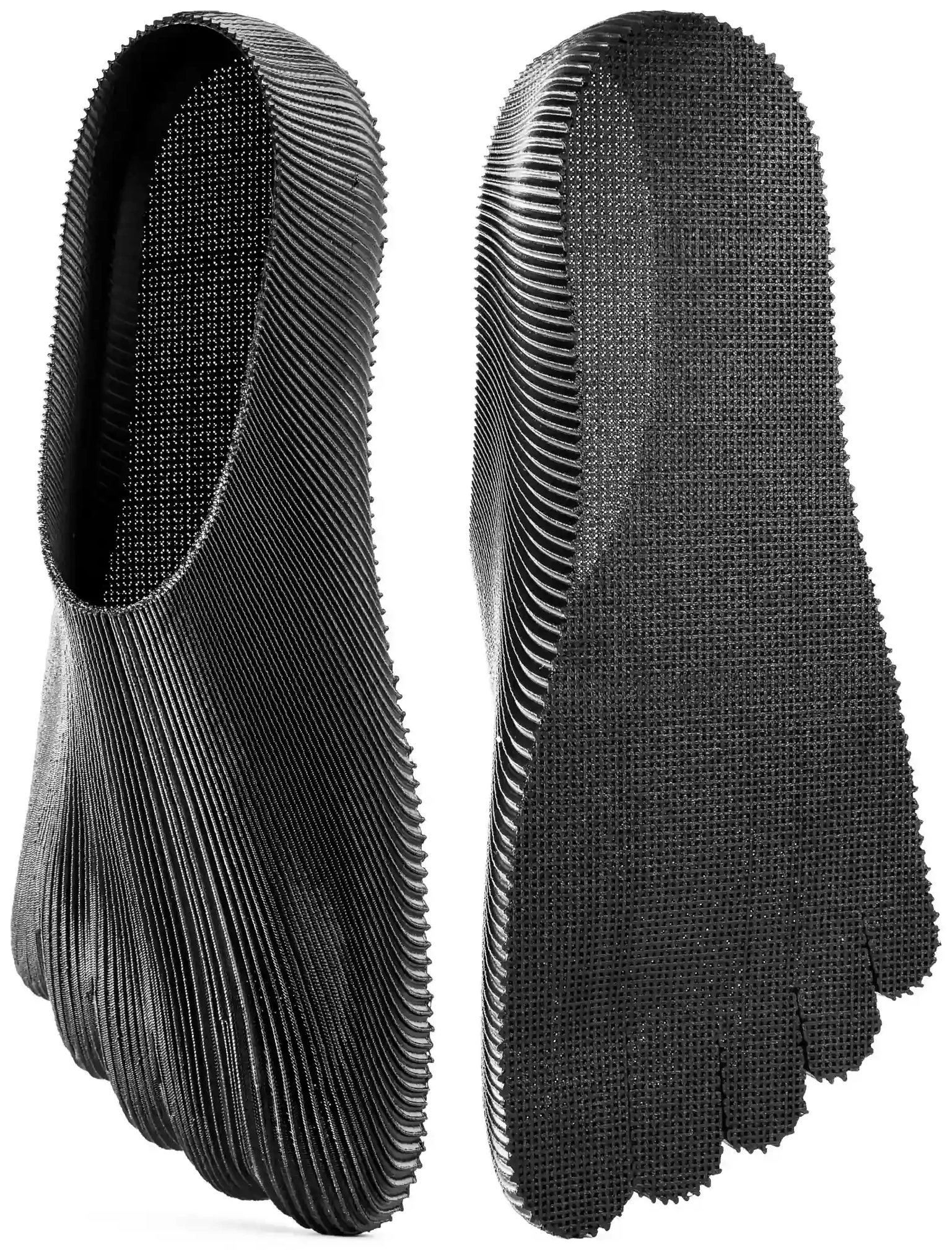
Same barefoot upper as Tora, with a fine TPU sole added for protection from water, dust and outdoor floors. Custom-fit option available, or download the print files.
View TakaThe custom-fit flow is the part worth comparing directly to Syntilay. You do not need to fly to Times Square. You send two photos (one top view of both feet, one side profile of one foot), River adjusts the shoe geometry manually around your foot shape, and you receive either a finished pair or a G-code file ready to print at home. It is less automated than Syntilay's 5,000-point scan, but it works from any phone camera and the geometry is reviewed by a designer rather than generated end-to-end.
The trade-off is also worth being honest about: River shoes are barefoot or thin-soled in shape, not running shoes or sport silhouettes. If you want an Air Max look, buy the Air Max 1000 from Nike via Zellerfeld. If you want a sculptural sneaker silhouette, the Waveform Shoe on MakerWorld is a strong alternative. If you want the AI-driven lattice midsole, look at Syntilay. River shoes occupy the lightest, most minimal end of the printed-shoe space — small in volume, soft on foot, and easy to print at home if you ever want to.
How to pick between them
The right pick depends on three questions.
Do you own a TPU-capable printer? If yes, the cheapest path is to download free files (our printable shoes guide) and print at home. A pair of Tora costs around €15-€20 in TPU and 10-30 hours of print time. If no, you are buying from Zellerfeld, Syntilay or directly from River.
How important is the silhouette? Looking like a normal sneaker matters more for some buyers than for others. Air Max 1000 is the closest a printed shoe gets to a recognizable mainstream look. Basilisk and Waveform lean sculptural. River and Syntilay slides lean minimal or technical. Pick on appearance first — printed-shoe geometry varies more than mass-produced sneakers do.
How much do you care about fit precision? Standard Zellerfeld sizing works for most feet. Syntilay's biometric scan delivers the tightest fit but requires either a kiosk visit or detailed online scan. River's foot-photo flow is a middle ground: better than off-the-shelf, simpler than a full scan, available anywhere with a phone.
Beyond these three, the wider trend matters: print farms like Zellerfeld are removing the cost barrier to launching a footwear brand. A designer with one good shoe and an upload now reaches a global market. For a fuller picture of where this is going, see our notes on how foot-photo custom fit actually works and how long 3D printed shoes actually last.