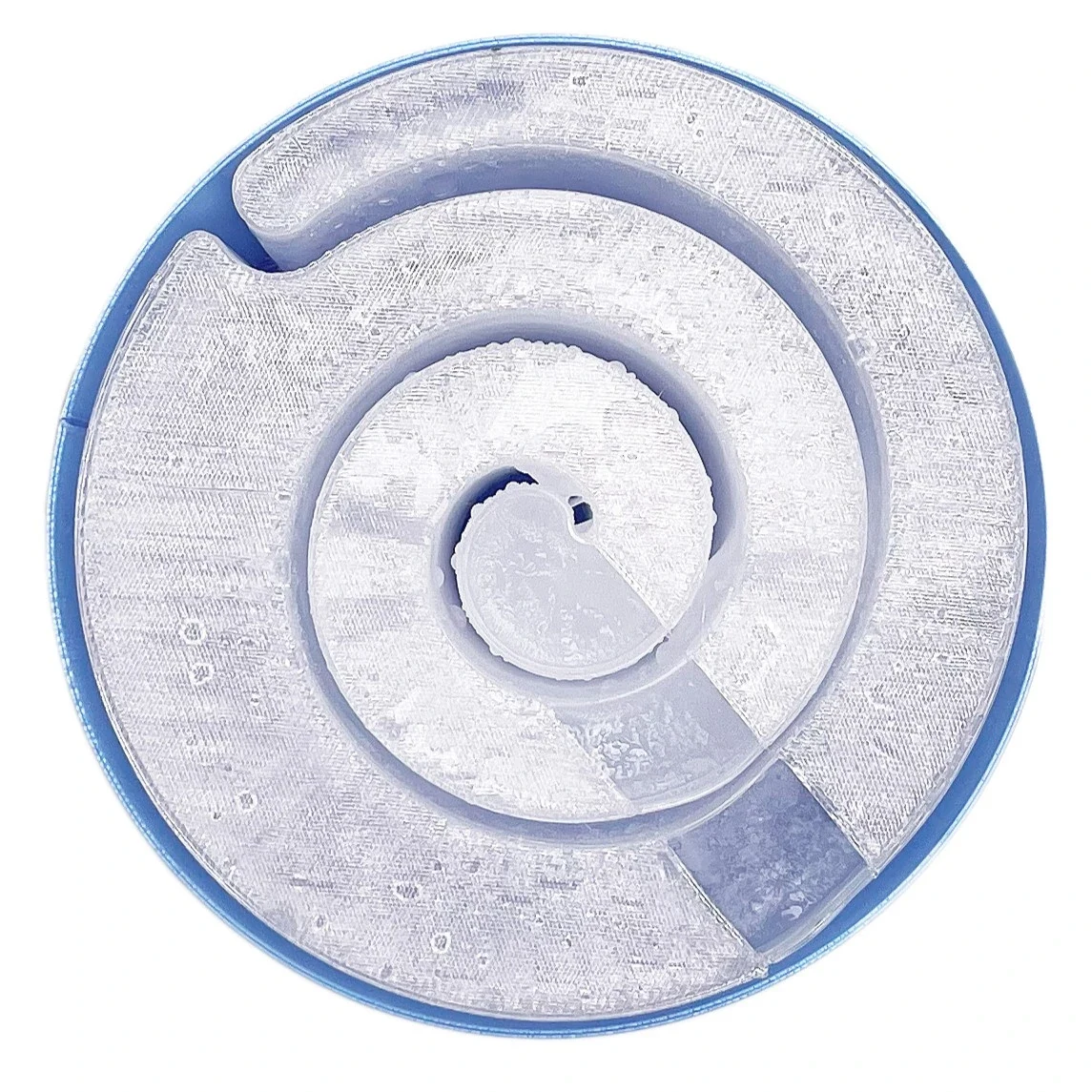
River cacao bars start with a practical problem: cacao and milk powder do not become smooth just because they are warmed together. The melanger is what turns them into a smooth cacao mass.
A melanger is a stone grinder that keeps turning until the particles become fine and the recipe turns smooth, workable and pourable.
The grinder does two jobs, but not at the same speed. Mixing happens first. Even cocoa nibs, milk powder, coconut milk powder or cocoa butter can come together relatively early. Smoothness and flavor take longer.
In practice, River usually starts from 100% cacao paste for simplicity — often simply 100% cacao bars. The hard work has already partly happened, so the chocolate can usually spend much less time in the melanger: around six hours can be enough for the ingredients to combine and the texture to become coherent.
If the recipe starts from cocoa nibs, the process is longer. Nibs are roasted, peeled and broken cacao beans; they still need to be ground down and conched for much longer. A 48 to 72 hour run is a realistic direction when the goal is a smoother, less sharp bean-to-bar chocolate.
That long time is not only about mixing. The ingredients are already mixed before that. The extra time helps drive off volatile acidic notes from the cacao, so the chocolate tastes rounder instead of aggressively sharp.
This is why River cacao bars should not be described like normal candy bars. The shape is minimal, the ingredients are few, and the process exists because cacao, milk powder and coconut milk powder need real refining to become a clean bar.
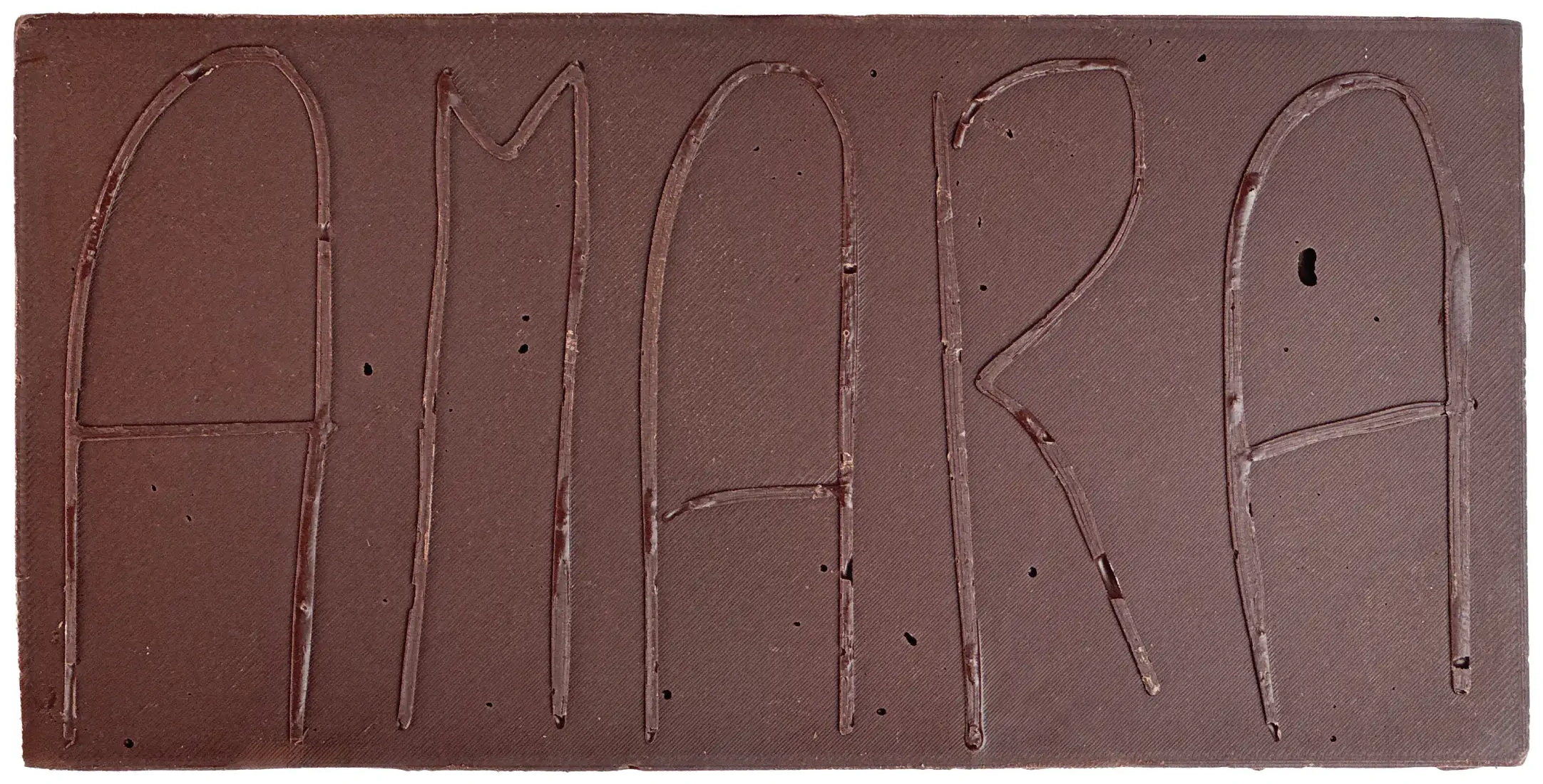
Amara
A bitter milk-cacao bar for people who like dark profiles: 2/3 cacao and 1/3 milk powder, with no added sugar. It lands close to an 80% dark character, but the softening ingredient is milk, not plain sugar.
View design