Roasting is one of the biggest flavor decisions in chocolate. It changes the cacao before the grinder ever starts, pushing the bean toward brighter, deeper, more toasted or more rounded notes depending on time and temperature.
Roasting also removes part of the natural acidity in the bean, but not all of it. Some of that sharp volatile acidity remains, especially when the cacao is processed lightly or when nibs are used directly.
Conching is the long part of the melanger run that helps manage that remaining acidity. The chocolate may already be mixed, but the grinder keeps exposing the mass to movement and air so volatile acidic notes can leave slowly.
That is why nib-based chocolate can need 48 to 72 hours. The time is not there because the ingredients still refuse to combine. It is there because the flavor is still changing.
With 100% cacao paste, the process can be much shorter because the cacao has already been ground and partly developed. That is why River often starts from 100% cacao bars: around six hours can be enough when the goal is to combine the recipe cleanly without a long nib-to-chocolate transformation.
Acidity is not always a defect. Some people like a brighter cacao profile. For that direction, raw nibs, lighter roasting or shorter conching can keep more of the sharp fruit-like edge. River chocolate can explain that choice instead of pretending every bar should taste the same.
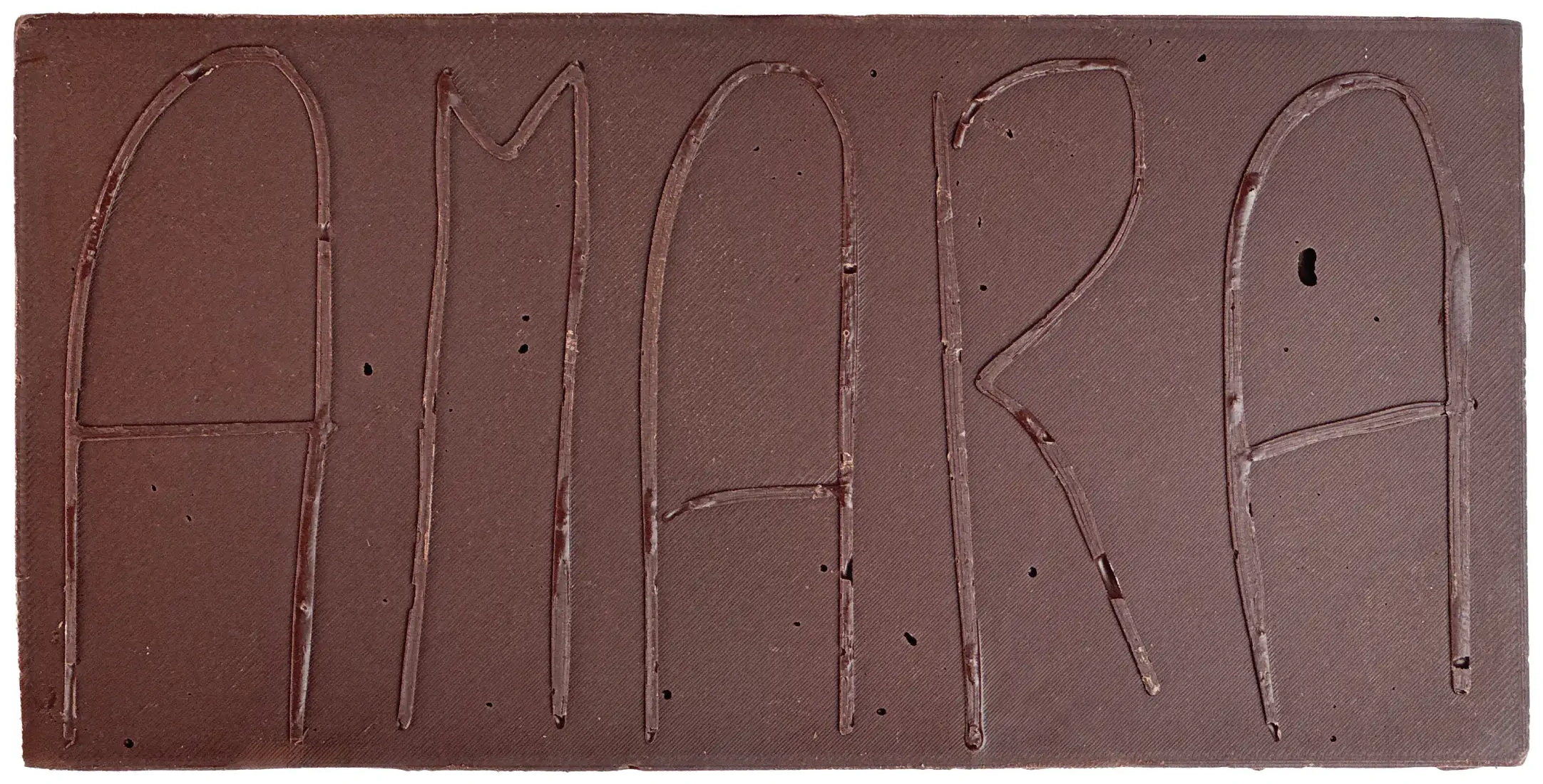
Amara
A bitter milk-cacao bar for people who like dark profiles: 2/3 cacao and 1/3 milk powder, with no added sugar. It lands close to an 80% dark character, but the softening ingredient is milk, not plain sugar.
View design